

No One Was in the China Market Yet, So I Chose to Be the First to Taste the Crab 🦀
2026.11.16
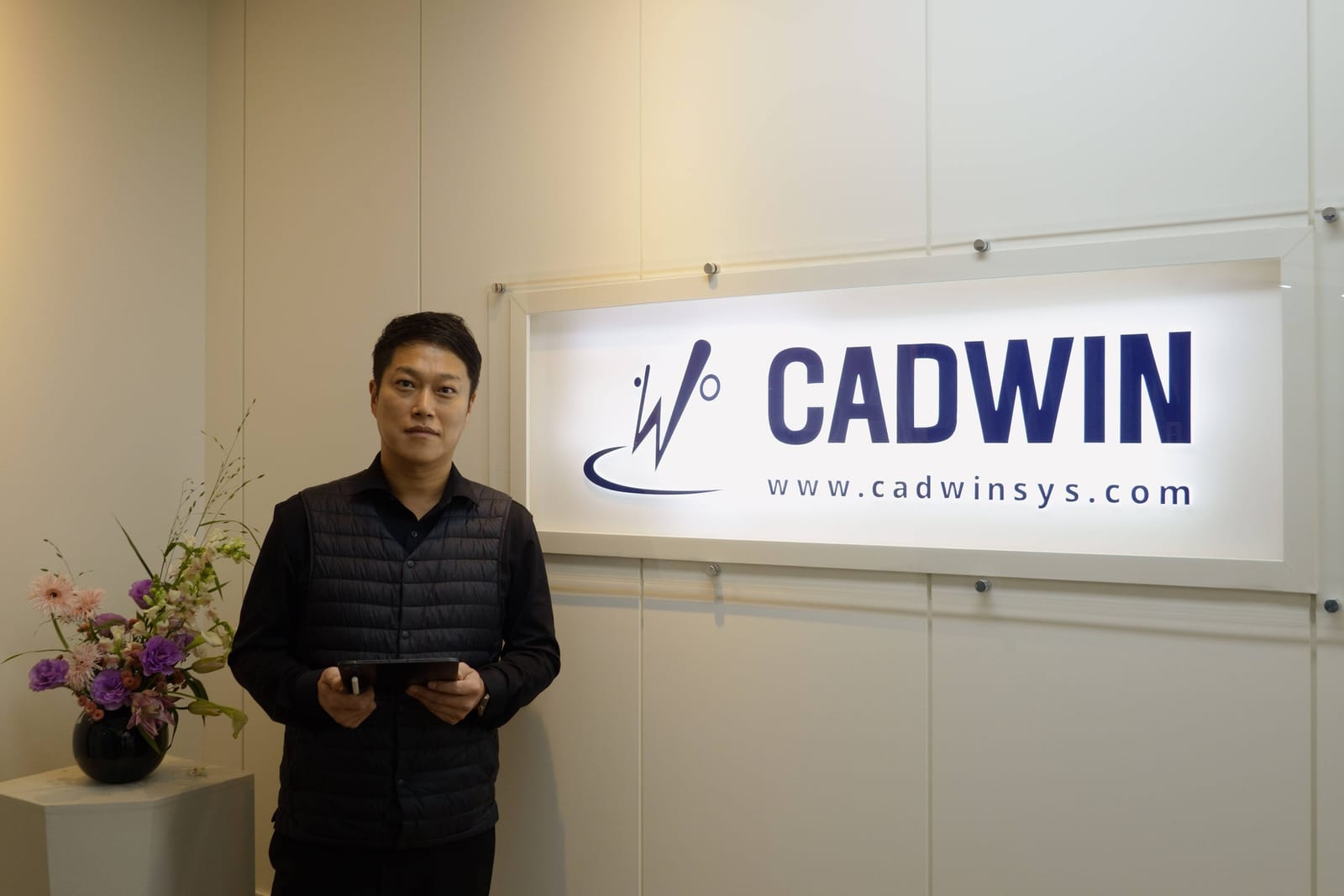
Shin Ha-young leads the China branch of CADWIN SYSTEM. At the time of joining, Shin was the only person in the company responsible for the China market, and the first contract took more than a year to land. Today a team of five runs the branch and the distributorship together. We heard the story of opening the Chinese shipbuilding market from the very beginning. 🌏
Q. How did you come to join CADWIN? 👋
I majored in economics and trade and graduated from a university in China. I had done some short part-time work there, but CADWIN SYSTEM is my first real job.
I joined with the understanding from day one that I would take on the China market. The company had a clear plan to open up China on its own, and I wanted to use my background to break into that market on the front line of overseas sales. One week after joining, I was already out in the field.
Shipbuilding was booming at the time, and the company was very active, with nesting software at the center. I still remember my first day clearly. The marketing team had its own office on the seventh floor, and it struck me as a solid sales organization.
Q. How many people covered China when you joined? 🧭
Just me. I was the only person in the company dedicated to China, so I literally had to take the first step from zero and clear the path myself.
Language was not the big problem. I went to university in China, so everyday conversation and daily life were familiar. What was really hard was shipbuilding terminology and business negotiation. Those are not things you learn at school. I picked them up one by one by going out to the field and working things through directly with customer engineers and staff. Looking back, that was probably the hardest part.
The first business also opened up the hard way. We invited key people from the large shipyards that represented Chinese shipbuilding at the time to our head office in Korea for a technical exchange. By showing them first-hand what we could do, we built trust little by little, and that is where the first business opened up.
Q. How did you win your first contract? ✍️
It was a project supplying a cable engineering solution to a Chinese shipyard. I spent six months digging into the product to understand it properly, kept knocking on the door after that, and only saw the first result more than a year after joining.
It was a contract I had waited a long time for, but at the moment of signing, the first thought was not pride. It was "this is only the beginning." That may sound strange. 😄
Q. When did things feel most hopeless? 🧱
It was less a specific moment than a constant barrier: most large Chinese shipyards are state-owned enterprises. Decision-making, internal approval, bidding and sign-off work completely differently from Korea or Japan, and they are complex. No matter how good the technology we proposed, every time we ran into the wall of administrative procedure and regulation, it felt hopeless. Honestly, it is still something we have to push through on every project.
China runs on a formal bidding system. Once a project takes shape, we help make sure our solution's specifications are reflected from the customer's internal approval stage, and then it goes through an open tender, an invited tender or a single-source tender. From the approval proposal to the bid documents, contract, interim report and final acceptance certificate, we prepare every document ourselves to Chinese-language standards.
Q. Was there ever a moment you wanted to quit? What kept you here? 🔥
It would be a lie to say no. But if I had to name the reasons I stayed, there are three.
First, I had to keep learning all the time. Developers focus on their own part, but technical sales has to know every one of the company's solutions broadly. For someone from a humanities background, learning engineering software in depth and carrying it all the way into sales was not easy, but it meant there was something to learn every day.
Second, I was desperate to make it. I thought that if I backed away here because it was hard, I might run from a similar wall somewhere else too. So I kept things simple, held on with the mindset of preparing for the future, and I still work with that same urgency.
Third, I wanted to take a road no one had taken. In China there is a saying, "I want to be the first person to taste the crab🦀." It means a brave pioneer who takes the risk others fear and leaps into the unknown. It is also my KakaoTalk status message.
Q. What does it mean to sell shipbuilding software in China? 🤝
Software means selling "intangible value." You are not handing over goods at a list price. The marketer's planning skills and problem-solving ability shape the outcome a great deal.
"We have a good product, so please buy it" does not win a contract. You first have to pinpoint exactly where the shipyard is stuck in production and design, and what it really needs. If the customer needs A and we offer B or C, it will not get in, however good the technology is. That is why I describe this work as planning-led sales that defines the customer's problem first and then fits the solution to it.
Q. How are Chinese shipyards different from those in Korea and Japan? 🚢
They ask in a different way. Large shipyards in Korea and Japan already have strong in-house capability, so their requirements are clear: "We need functions A, B and C, so develop them to our standard." Chinese shipyards are closer to: "We have this bottleneck on our floor. How can you solve it?" You have to go beyond simple delivery, diagnose the process and propose improvements as well.
The way you earn trust is also different from what people imagine. When people think of doing business in China, they often think of guanxi or smooth talking, but in reality nothing works without trust in your work. Actually solving the technical problems on the floor and keeping the schedule you promised is where trust starts.
Q. Which products sell the most in China right now? 🛠️
Apart from nesting, it is SmartWeld and SmartPaint.
For SmartWeld in particular, I analyzed the process characteristics of Chinese shipyard floors and planned the direction myself of splitting it into modules so customers can adopt only the functions they need. We approached it as a customer-tailored project rather than selling features, and the response was good.
It is a case where marketing, planning and development meshed to build a product that fits the floor, so it means a lot to me.
Q. How has Chinese shipbuilding changed over the years? 📈
It has changed a lot over the past twenty-odd years. From around 2005 to 2015, it was closer to a "student" eager to absorb and learn advanced technology. Since 2018, a transparent and strict bidding system has taken hold, and shipyards are advancing their own technology and drawing up smart yard roadmaps. Today they look at both technology and systems with world-class expectations.
Q. What kind of team is the China branch? 👥
We act as both a branch and a distributor. As a branch, we handle the entire process centered on the Smart product line, from local registration in China and sales to technical proposals, bidding, delivery and after-sales support. As a distributor, we combine partner companies' technology to go after the market together. The head office focuses on global standard products and technical support, while we focus on planning tailored to China and on local sales.
Right now there are five of us, including me: Team Leader Jang Eo-san, Team Leaders Wang and Moon who support development, and the president of our distribution partner. We are a small group, but each person owns their own area. We are hiring developers now and plan to grow to about ten people by next year.
When I look at people, the first and second things are both a sense of responsibility. The strength to carry a long project through to the end in an unfamiliar market comes from attitude more than skill. Team Leader Jang Eo-san is that kind of person. Jang is junior to me, but I learn a lot just watching from alongside. With the local staff, too, it is not a relationship of giving orders but one where we give each other feedback and fill in each other's gaps.
Q. Who would enjoy working at the China branch? 🌏
Someone who enjoys defining problems and expanding a market on their own, rather than working inside a fixed frame. If you want to go beyond what you are given, plan things yourself and get results by taking on the field directly, you can grow a great deal here.
The schedule moves at a breathless pace, though. Meetings with large shipyards, bid preparation, technical proposals and coordination with vendors are tightly interlocked, so we split the day into 30-minute to one-hour blocks and set priorities as we go.
Q. In a market where big vendors are also present, why do customers choose us? 💡
I see three reasons: the trust we have built on the floor over a long time, the flexibility to pinpoint and meet what customers need now and in the medium term, and technical support that takes responsibility to the end, even after adoption. If the big vendors supply standard packages, we are becoming the partner that scratches exactly where the floor itches and stays responsible to the end.
If I had to introduce us to a Chinese customer in one sentence, I would say: "the one solution partner that goes beyond technology, works with sincerity, and that you can trust and travel with all the way." (laughs)
Q. What do you want the China branch to become? 🚀
I have three directions in mind.
First, connecting software and hardware. The idea is not that we will do all the hardware, such as robot automation, ourselves. We want to process and connect the data that flows from design all the way to the production floor. From here on, data is the asset.
Second, a two-way channel between Korea and China. I would like to partner with Korean companies that want to enter China, and in the other direction, introduce competitive Chinese equipment to Korea.
Third, a local organization that runs on its own. I want to systematically hand over the customer network and trust I have built to the team, so that local talent leads projects directly. Once shipbuilding is firmly established, I plan to boldly expand into other industries such as renewable energy and onshore plants.
Rather than trying to do everything alone, I think it is important to join hands with partners who have proven technology. Collaboration where 1+1 makes not 2 but 5 or 10. If I may share a distant dream, someday I would like to build, in China, software that controls humanoid robots working on the floor.
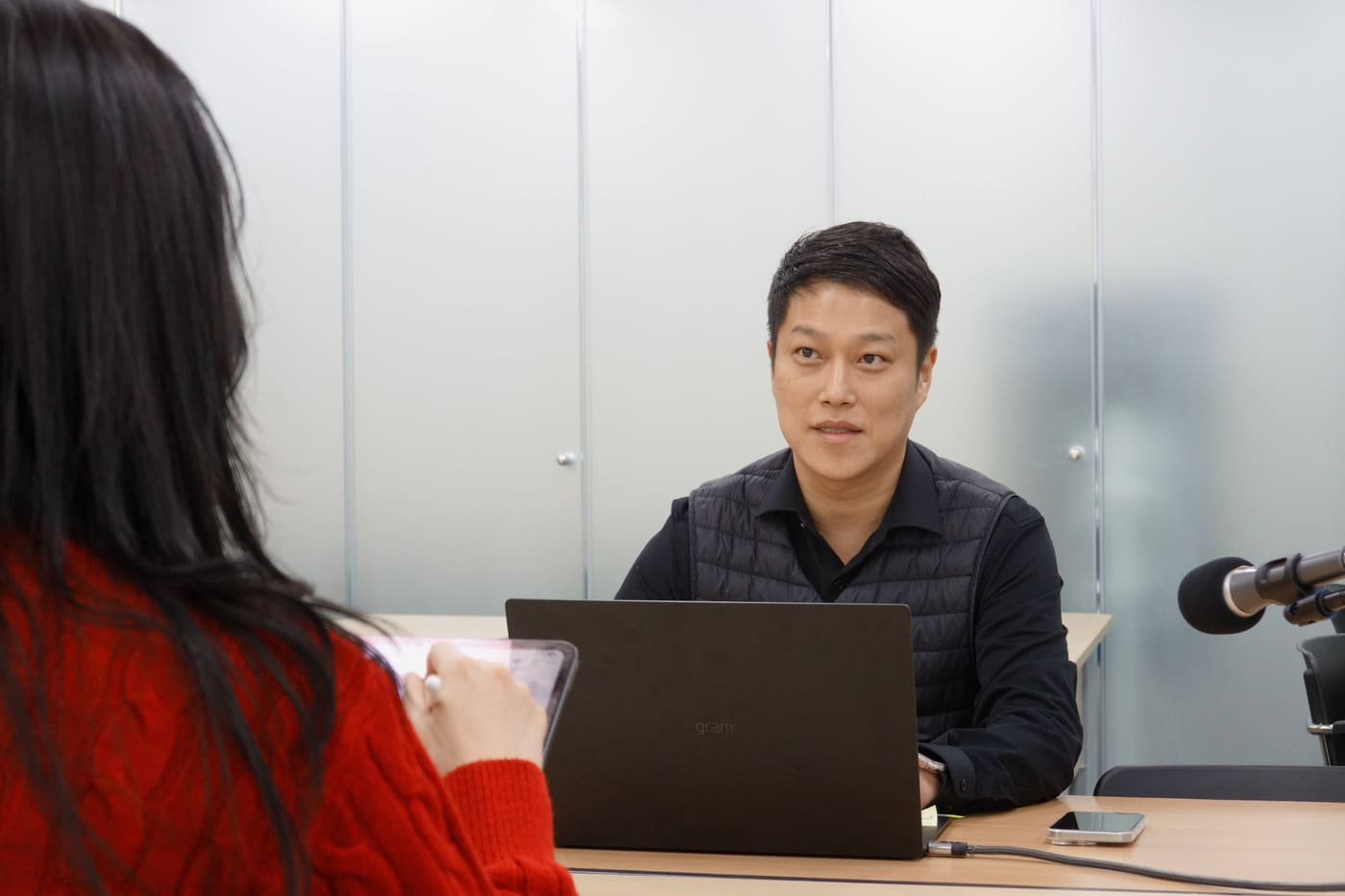
Q. Any advice for younger colleagues who want to work overseas? 💌
"Don't overthink it. Just knock on the door boldly first."
This is my personal view, but I think the period in a career when you can work hardest and grow the most is from age 35 to 55. Rather than weighing things and worrying at your desk, you have to take a step and run into the field before the next road opens and you find a weapon of your own.
Once the door opens, though, you need stamina for the long run. In China especially, you have no chance if you think of making one sale and being done. Instead of chasing short-term results in a hurry, you need to understand the local system deeply and prepare step by step. Prepared that way, it is also a place with more opportunity than any other market.
I hope you take on the challenge without hesitating. 😊